AI Is Everywhere, But What Does That Really Mean?
Turn on the news, scroll through social media, or listen to any business conversation these days, and you’ll hear about artificial intelligence. It’s in your phone, your car, your Netflix recommendations, and probably in half the apps you use every day without even realizing it.
But here’s the thing—most people still don’t fully understand what’s happening right now with AI. They know it exists. They know it’s important. But the actual changes taking place in 2025? Those are moving so fast that even tech experts are struggling to keep up.
The generative AI market is expected to exceed $66.62 billion by the end of 2025, with long-term estimates reaching $1.3 trillion by 2032. ChatGPT now has 800 million weekly active users. That’s more than the entire population of Europe using a single AI tool every single week.
In practical terms, AI may replace 85 million jobs but create 97 million new ones by 2025, resulting in a net gain of 12 million jobs globally. The question isn’t whether AI will affect your life—it already has. The question is whether you understand how, and whether you’re ready for what comes next.
Let’s talk about what’s actually happening with AI right now, why it matters more than you think, and how you can make sense of it without getting lost in tech jargon.
Agitation: The Gap Between Hype and Reality
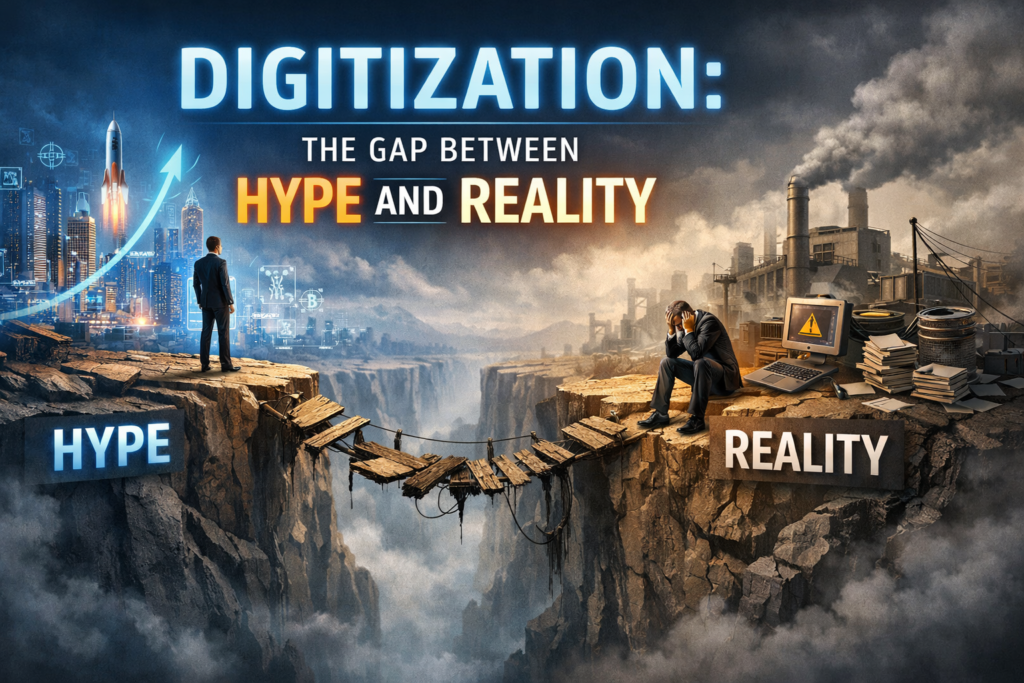
Here’s where things get uncomfortable. Everyone’s talking about AI, but 88% of non-users are unclear about how generative AI will impact their life. Even more surprising? Only a third of consumers think they are using AI platforms, while actual usage is 77%. That means most people are already using AI daily without even knowing it.
This gap between perception and reality is creating problems. Businesses are making billion-dollar bets on AI without fully understanding what they’re buying. Employees are worried about losing jobs to AI without realizing the technology might actually make their work easier. Students are using AI for homework, but don’t understand when it’s helping versus when it’s just making stuff up.
The confusion is real, and it’s causing real issues. Companies are racing to adopt AI because they’re afraid of falling behind. 72% of companies globally reported using AI in at least one business function in 2024, with 85% of C-suite executives listing AI as a critical driver of their growth strategies. But adoption without understanding leads to wasted money, failed projects, and disappointed expectations.
Look at what’s happening with AI video generation and text-to-video AI. The AI-generated video market is projected to grow at 35% annually, reaching approximately $14.8 billion by 2030. Currently, AI-generated videos account for 40% of video content on major social media platforms. That video you watched on Instagram? There’s a decent chance it was partly or fully made by AI.
For content creators, this is both exciting and terrifying. On one hand, AI scriptwriting tools and AI voice synthesis are making it possible to create professional content without expensive equipment or teams. Over 62% of marketers using AI tools for video production report that text-to-video platforms help them cut content creation time by more than half.
On the other hand, AI character consistency—the ability to keep the same person or character looking the same across multiple scenes—is still improving. AI model training is getting better every month, but it’s not perfect. People are publishing AI models and discovering bugs. They’re trying AI content monetization and running into copyright questions no one has clear answers yet.
Then there’s the whole world of multimodal AI—systems that can understand and create text, images, audio, and video all at once. This isn’t science fiction. It’s happening now. Tools like ChatGPT can now look at pictures, understand what’s in them, and have conversations about them. They can help you edit videos, write scripts, and even generate music.
And we’re just getting started with AI agents and agentic AI. These are AI systems that don’t just respond to your questions—they actually go out and do things for you. 23% of organizations are scaling an agentic AI system somewhere in their enterprises, and an additional 39% say they have begun experimenting with AI agents.
Think about that. We’re moving from “AI that answers questions” to “AI that completes tasks.” An AI agent could, in theory, manage your calendar, book your flights, respond to certain emails, and handle routine work tasks while you focus on things that actually need human judgment.
The speed of change is the real problem. Most people are still figuring out how to use ChatGPT, and meanwhile, the technology has already moved three steps ahead. By the time you learn one tool, five new ones do things differently and supposedly better.
Let’s Get To Know More About What AI Actually Does:

Let’s cut through the noise and talk about what’s really happening with AI in 2025, and what you actually need to know.
Generative AI is the foundation of everything right now. This is AI that creates new content—text, images, video, music, code. ChatGPT writes articles. DALL-E makes pictures. Sora generates videos. These aren’t just toys. They’re production tools that millions of people use every single day for actual work.
This isn’t about AI replacing humans. It’s about AI helping humans do more, faster, and often better. The key is understanding where AI helps and where it doesn’t.
AI video generation is exploding right now. Remember when making a video required a camera, lights, editing software, and days of work? The AI video generator market was estimated at around $534 to $615 million in 2024 and is projected to climb to $2562.9 million by 2032. Tools like Runway, Sora, and Synthesia are making it possible for anyone to create professional-looking videos from just text descriptions.
Fashion company BESTSELLER used Synthesia to roll out a global training program with AI avatars that presented information to employees worldwide in multiple languages. What would have taken months and cost hundreds of thousands of dollars happened in weeks at a fraction of the cost.
But here’s the reality check: AI-generated video still has limitations. AI character consistency—keeping characters looking the same across scenes—is improving but not perfect. Physics can look weird. Hands sometimes do strange things. The technology is incredible, but it’s not magic.
For anyone creating content, the smart move is using AI as a tool, not a replacement. Use AI scriptwriting tools to draft scripts faster. Use AI voice synthesis for voiceovers. Use text-to-video AI for B-roll footage or backgrounds. But add your own creativity, judgment, and editing on top.
Multimodal AI is changing how we interact with technology. This might be the most important development most people don’t know about. Multimodal AI can understand and work with text, images, audio, and video all at once. You can show a picture and ask questions about it. You can describe what you want to see, and it creates an image. You can give it a video and ask it to edit specific parts.
ChatGPT interactions show only one in five prompts focused on information retrieval, while users turn to AI for creative ideation (32%), practical guidance (24%), and technical or problem-solving tasks (22%). ChatGPT prompts average 60 words compared to Google’s 3.4-word queries, showing people are having real conversations with AI, not just searching.
This shift matters because it means AI is becoming more like a smart assistant and less like a search engine. You’re not just asking questions—you’re collaborating with it to create things, solve problems, and explore ideas.
AI agents and agentic AI are the next big shift. This is where things get really interesting. Instead of you asking AI to do something and waiting for a response, AI agents can take action on your behalf.
The global AI agents market is projected to reach $7.6 billion in 2025, up from $5.4 billion in 2024. 88% of executives say their team or business function plans to increase AI-related budgets in the next 12 months due to agentic AI. And 79% say AI agents are already being adopted in their companies.
What does this mean in practice? Capital One created an AI agent called Chat Concierge for auto dealerships. It helps car buyers ask questions, set up appointments, and schedule test drives. The system increased customer engagement and is 55% more successful at completing tasks compared to previous tools.
PepsiCo is using AI agents in its technology ecosystem, customer service, and employee experience. They’re measuring productivity gains, costs, and how people interact with these systems.
The key thing to understand about AI agents: they’re not replacing humans—they’re handling the boring, repetitive stuff so humans can focus on work that actually requires judgment, creativity, and relationship-building.
AI model training and publishing AI models are becoming more accessible. A few years ago, only big tech companies could train AI models. Now, smaller companies and even individuals can train custom models for specific tasks.
This matters because it means AI can be specialized for your industry, your company, or even your personal needs. Instead of using a general-purpose AI that knows a little about everything, you can use or create an AI that’s an expert in exactly what you need.
Platforms are emerging where people can publish AI models, share them, and even monetize them. Think of it like an app store, but for AI capabilities. Need an AI that’s really good at understanding medical terminology? There’s probably a model for that. Need one that understands legal contracts? Someone’s likely trained one.
AI content monetization is a growing opportunity (with complications). Content creators are figuring out how to make money with AI-generated content. Some are using AI to create YouTube videos, podcasts, or social media content at scale. Others are using AI to enhance their existing content—better thumbnails, automatic captions, and repurposed content across platforms.
Blog-to-video tools are projected to be used by 40% of content marketers in 2025, as brands repurpose written content into engaging short-form videos. Top AI-assisted creators are earning $500K-5M+ annually through volume, quality, and speed.
But there are real questions about copyright, authenticity, and disclosure. Should you tell your audience if the content is AI-generated? Do you own content created by AI? What happens if your AI-generated content accidentally copies something else? These questions don’t have clear answers yet.
The smart approach: use AI as a tool to enhance what you create, not replace your creativity. Use it to work faster and test more ideas. But bring your unique perspective, judgment, and voice to the final product.
The practical advice for anyone trying to navigate this: Start small. Pick one AI tool that solves a specific problem you have. If you write a lot, try ChatGPT or Claude for drafting. If you create videos, experiment with AI scriptwriting tools or text-to-video AI. If you do research, use AI to summarize documents or find patterns in data.
Use it regularly for a few weeks. Figure out what it’s good at and what it’s not. Learn its limitations. Then, gradually add more tools as you understand how they fit into your workflow.
Don’t try to learn everything at once. The technology will keep evolving. New tools will keep launching. That’s okay. Focus on using what helps you right now, and stay curious about what’s coming next.
Pay attention to how your industry is using AI. By 2030, over 55% of non-tech industries are projected to integrate AI solutions. Whatever field you’re in—healthcare, education, finance, retail, construction, anything—AI is coming, and the people who understand how to use it effectively will have an advantage.
The organizations seeing the most value from AI aren’t just throwing money at technology. They’re thinking strategically about where AI creates real value, training their people properly, and focusing on problems AI is actually good at solving.
Why This Actually Matters
Here’s the bottom line: AI isn’t coming—it’s already here. 78% of organizations now use AI in at least one business function, up from 55% in 2023. 71% of organizations regularly use generative AI in business operations, compared to 33% in 2023.
This isn’t a technology you can ignore and hope it goes away. It’s not a fad that will pass. Its infrastructure—like the internet was 25 years ago, like mobile phones were 15 years ago. It’s becoming part of how work gets done, how content gets created, and how problems get solved.
The good news? You don’t need to be a technical expert to benefit from AI. You just need to be willing to experiment, learn what works, and adapt your approach based on results.
The organizations and individuals winning with AI in 2025 aren’t the ones with the most advanced technology. They’re the ones who understand their goals clearly, use AI strategically to reach those goals, and maintain human judgment and creativity in the process.
AI is a tool. An incredibly powerful tool that’s getting better every month, but still just a tool. The question isn’t whether to use it. The question is how to use it well—in ways that actually help you, your work, and the people you serve.
That’s the real opportunity here. Not AI replacing humans, but AI augmenting what humans can do. Making the boring stuff faster so we have more time for the interesting stuff. Handling routine tasks so we can focus on creativity, strategy, and relationships.
The future isn’t AI versus humans. It’s humans plus AI, working together, creating things neither could do alone. And that future is already starting.
Key Takeaways
- AI adoption is accelerating, with 72% of companies globally using AI in at least one business function
- The generative AI market is expected to reach $66.62 billion by the end of 2025
- AI video generation market is growing from $534 million (2024) to $2,562 million (2032)
- 54.6% of US adults now use generative AI, up 10 points in one year
- AI agents representing the next evolution—23% of organizations are already scaling them
- Multimodal AI enabling richer, more conversational interactions
- AI is improving productivity by up to 66% in various roles.
- 40% of social media video content is now AI-generated
- Focus on using AI as a tool to augment, not replace, human creativity
- Start small, experiment with one tool, learn limitations, then expand.
The revolution isn’t coming. It’s here. The question is what you’re going to do with it.